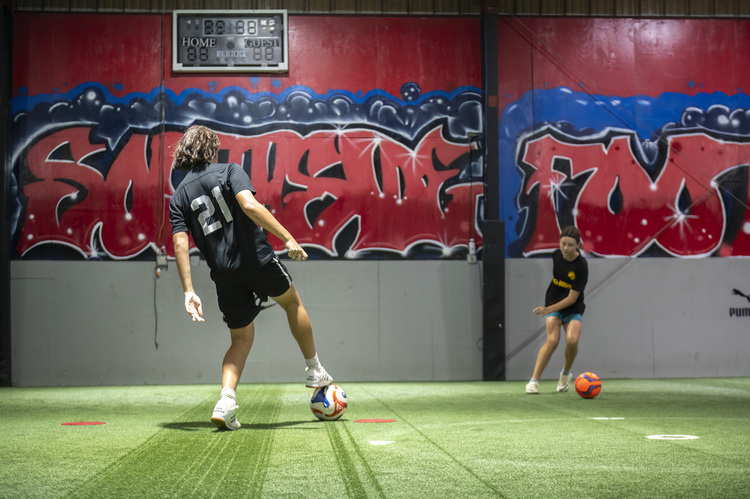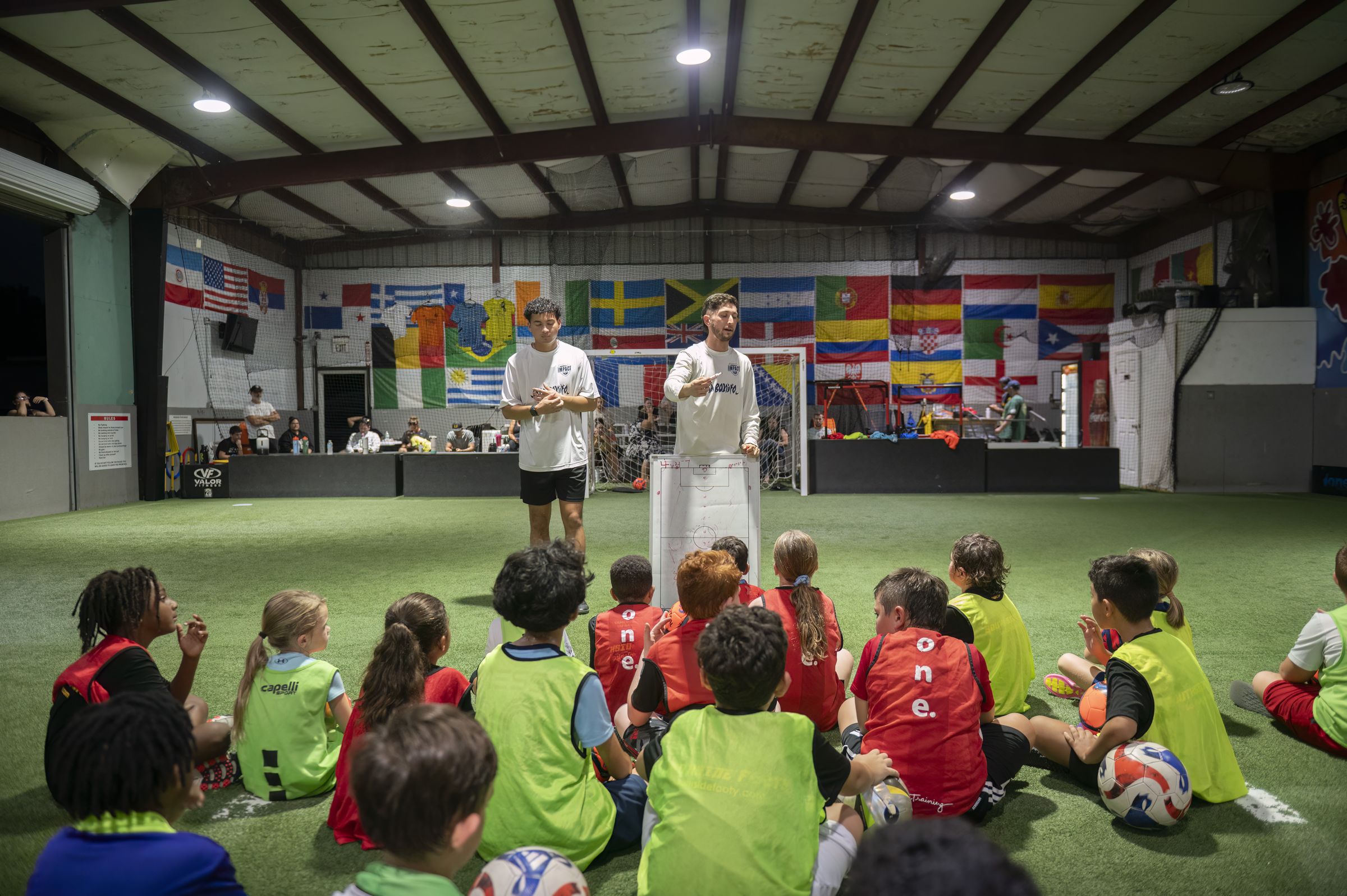
Most youth soccer training follows the same formula: run drills, scrimmage, repeat. Coaches focus on what players do with their feet, but rarely consider what's happening in their brains.
That's a problem. Because skill development isn't really about your feet, it's about your nervous system. Every touch, every decision, every movement pattern is controlled by neural pathways in the brain. And the science of how those pathways form, strengthen, and become automatic is well understood. It's just rarely applied to youth soccer.
At Southside Footy, we built our entire training methodology around neuroscience. Not as a marketing gimmick, as the actual operating system for how we develop players. Here's what that means in practice and why it produces faster, more durable results.
Myelin is a fatty substance that wraps around neural pathways every time you perform a movement with focus and intention. Think of it like insulation around an electrical wire, the more myelin, the faster and more accurately the signal travels. This is literally what "muscle memory" is: heavily myelinated neural circuits that fire automatically.
The implications for training are profound:
Your brain is a prediction machine. It's constantly taking in information, comparing it to past experience, and predicting what's about to happen next. In soccer, this is what we call "reading the game", knowing where the defender is going before they move, seeing the pass before the space opens, anticipating the shot before the striker winds up.
This isn't instinct. It's a trained neural function. And it can be developed deliberately.
At Southside Footy, we use contextual training, drills and scenarios that bridge the gap between isolated technical work and real match situations. Instead of just practicing a skill in a vacuum, we add defenders, time pressure, decision points, and unpredictability. This forces the brain to make predictions and adjust in real time.
Over hundreds of these reps, the brain gets better at predicting. The game slows down for the player. They stop reacting and start anticipating. That's the difference between a player who can do a skill in practice and one who can execute it in a match at full speed.
Neuroplasticity is the brain's ability to form new neural connections and reorganize existing ones. Young brains (ages 6-18) are in a period of heightened neuroplasticity, they learn faster, adapt more readily, and build new skills more efficiently than adult brains.
This is both an opportunity and a responsibility. The training environment your child is in during these years has an outsized impact on the player they become. Quality coaching during this window doesn't just teach skills, it physically shapes the brain's architecture for performance.
This is why we take our training methodology seriously at Southside Footy. We're not just running drills, we're working within a developmental window where every session has compounding long-term impact. Our mastery-based system (Futsal Levels I, II, III) is designed to progressively challenge players in ways that maximize neuroplastic adaptation at each stage.
It's also why we emphasize holistic development alongside technical skills. Resilience, discipline, confidence, and decision-making are all neural patterns too. When we train character alongside soccer, we're taking advantage of the same neuroplasticity window to build the whole athlete.
You don't need to understand the neuroscience to see the results. Parents consistently tell us they notice changes in their child within 4-6 weeks, better confidence, cleaner technique, more composed play. That's myelin and neuroplasticity doing their work.
But understanding the science does help explain why certain things matter:
At Southside Footy, we don't just train soccer players. We train brains. And the results speak for themselves, 265 Google reviews at a perfect 5.0-star rating from families who've seen the transformation firsthand.
Want to see the neuroscience difference in action? Schedule a free session and experience it yourself.