Every time your child steps onto the training floor, their brain is doing more than processing soccer. It's learning how to handle pressure. How to recover from failure. How to push through discomfort toward a goal. How to manage emotions when things don't go their way.
Youth sports psychology isn't just for elite athletes with sports psychologists. Every kid who trains is developing mental patterns that will shape how they approach challenges for the rest of their lives. The question isn't whether sports affect your child's psychology, it's whether the effect is positive or negative.
As a parent, understanding a few key principles can make the difference between a child who thrives in competition and one who burns out or shuts down.
The single most important concept in youth sports psychology: intrinsic motivation (internal drive to improve, enjoy, and master) vs. extrinsic motivation (playing for trophies, parental approval, or external rewards).
Research is clear: athletes who are intrinsically motivated train harder, persist longer, handle setbacks better, and stay in sports longer than those driven by external rewards.
How to build intrinsic motivation:
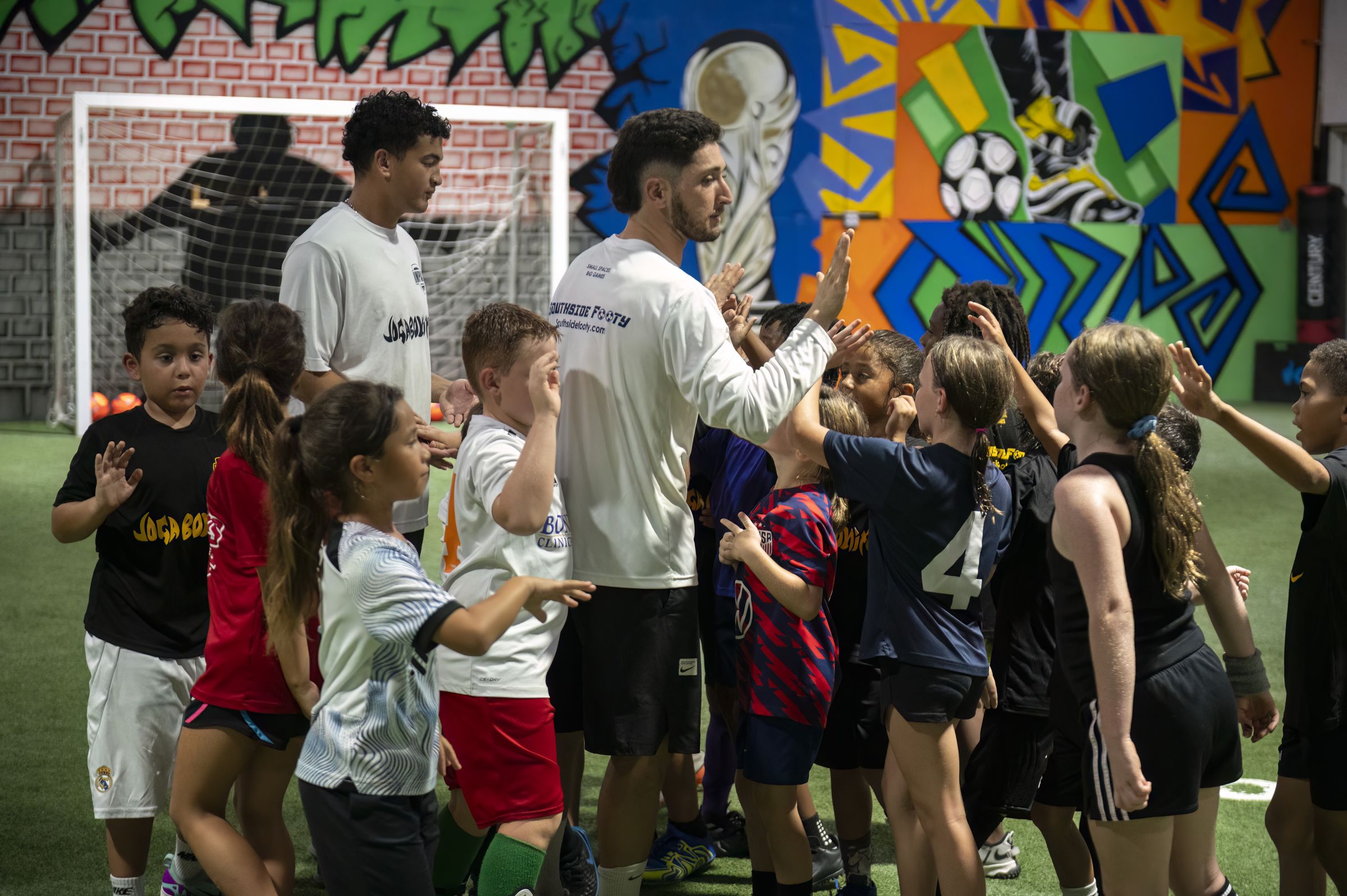
At Southside Footy, our coaching philosophy is built around intrinsic motivation. We create an environment where players want to improve because they experience the satisfaction of mastery, not because someone is yelling at them to run faster.
Pressure is inevitable in competitive sports. The difference between players who thrive under pressure and those who crumble isn't toughness, it's exposure and preparation.
The brain responds to pressure by activating the sympathetic nervous system (fight or flight). In untrained athletes, this manifests as anxiety: shaky legs, rushed decisions, technical breakdowns. In trained athletes, the same physiological response gets channeled into heightened focus and faster processing.
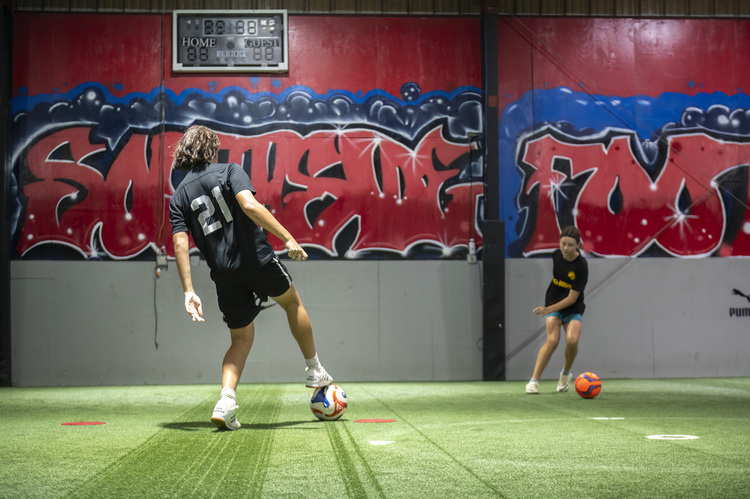
The key is graduated pressure exposure. You don't throw a 9-year-old into a championship match and expect them to be calm. You progressively introduce pressure in training:
This is exactly how our contextual training methodology works at Southside Footy. By the time a player faces real game pressure, they've experienced it hundreds of times in training. Their brain knows the feeling and knows how to perform through it.
Here's the paradox every parent needs to understand: your child must fail regularly to develop resilience. Not catastrophic failure. Small, recoverable failures in a supportive environment.
When a player tries a move and it doesn't work, their brain does something remarkable: it recalibrates. The neural pathway gets slightly adjusted. The next attempt is a tiny bit better. Over thousands of these micro-failures and micro-corrections, mastery emerges.
But this only works if the environment allows failure without punishment. If a coach screams when a player loses the ball, the player stops trying challenging moves. If a parent criticizes performance on the car ride home, the child stops taking risks.
At Southside Footy, we protect the space for productive failure. Our coaches encourage players to attempt difficult skills, even when they're not ready to execute them perfectly. We'd rather see a player try a creative move and lose the ball than play it safe with a sideways pass. The creative attempt builds a better long-term player. The safe pass builds a cautious one.
Supporting a young athlete's psychology doesn't require a degree in sports science. It requires awareness of a few key principles:
That last point is why environment selection matters so much. At Southside Footy, we've spent years building a culture that develops the whole athlete, not just the player. Our 5.0-star rating from 265 families reflects parents who've seen the difference a psychologically safe, mastery-focused environment makes.
If you want your child to develop both the skills and the mindset to thrive in competition, schedule a free session and experience our training culture firsthand.