Messi. Neymar. Ronaldinho. Ronaldo. Xavi. Iniesta. What do they all have in common? They grew up playing futsal.
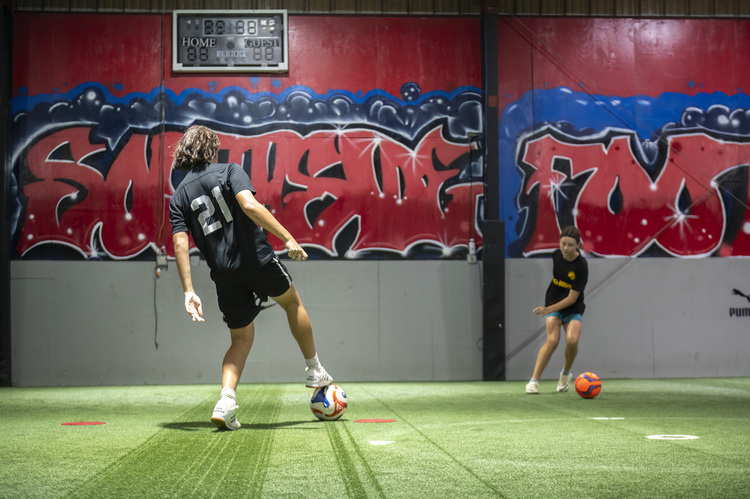
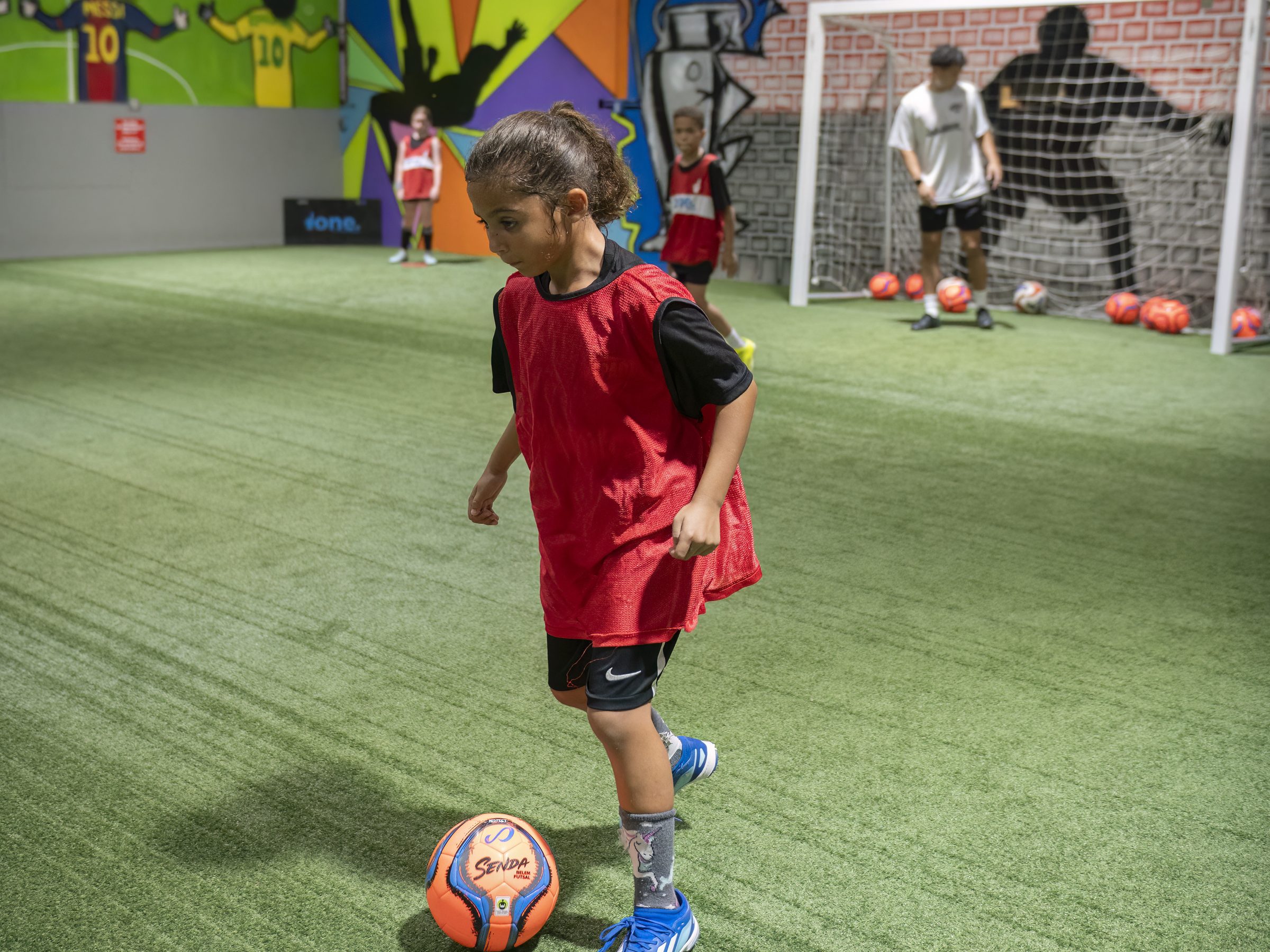
This isn't coincidence. Futsal, the fast-paced, small-sided version of soccer played indoors on a hard court, is the single best training environment for developing technical skill, quick thinking, and creativity in young players. And there's real science behind why it works.
At Southside Footy's Futsal Academy in Lakeland, FL, futsal is the foundation of everything we do. Not because it's trendy, but because it produces better soccer players, measurably, consistently, and faster than traditional outdoor training alone.
Here's why.
In a typical 11v11 outdoor soccer game, a player might touch the ball 20-30 times in 90 minutes. In a futsal match? That number jumps to 200+ touches in 40 minutes. That's roughly 6x more contact with the ball per minute of play.
Why does this matter? Because of how the brain learns motor skills. Every time your child touches the ball with intention and focus, their brain wraps a layer of myelin around the neural pathway for that movement. Myelin is the insulation that makes signals travel faster and more accurately. More quality reps = thicker myelin = faster, more automatic skill execution.
This is the core of our training philosophy at Southside Footy. We don't just want players to practice, we want them to build the neural infrastructure that makes great technique feel effortless. Futsal gives us the rep density that outdoor soccer simply can't match.
Futsal uses a smaller, heavier ball (size 3 or 4, with reduced bounce) on a smaller court. This changes everything:
Research on neuroplasticity shows that the brain adapts fastest when the environment demands rapid decision-making. Futsal creates exactly that environment. When these players step onto a full-size field, the game feels slower. They have more time, more space, and more composure, because they've been trained in a harder environment.
Watch any futsal match and you'll see moves that don't exist in textbooks. Nutmegs, elasticos, sole rolls, body feints, futsal players develop a style of play that's creative, unpredictable, and devastating in 1v1 situations.
This isn't random. The science of degrees of freedom in movement explains it: when players are placed in constrained environments (small court, heavy ball, constant pressure), they're forced to explore new movement solutions. Their brains expand the catalog of available moves. Over time, this produces players who can improvise under pressure, the exact quality that separates good players from elite ones.
At Southside Footy, our three-level Futsal Academy is designed to progressively expand these degrees of freedom. Level I builds the technical foundation. Level II introduces game-like complexity. Level III pushes decision-making under full match pressure. Players advance by skill mastery, not age, so they're always challenged at the right level.
Futsal isn't just a game, it's a development system. When used intentionally (not just as indoor recess), it produces players who are:
This is exactly why we built Southside Footy's training around futsal. Combined with our neuroscience-grounded methodology and mastery-based progression, it gives young players in Lakeland access to the same development pathway that produced the greatest players in history.
Every Sunday, we also run Futsal Sundays, open pickup games that let players apply what they've been learning in a competitive, low-pressure environment. It's one of the best ways to see what futsal training actually looks like in action.
Want your child to experience the futsal difference? Schedule a free session at Southside Footy and see the improvement for yourself.